The Official Big Lie (a war to end slavery)
In December of 1860 and January of 1861, many newspapers across the North and Midwest simply wanted to “let the South go in peace.” But the bankers, railroads and shippers soon informed the press of the financial implications of Southern independence.
The editorial tune changed dramatically in February and March of 1861 to “No, we must NOT let the South go,” and “what about our shipping?” and “what about our revenue?” As the New York Times noted on March 30th,“We were divided and confused until our pockets were touched.” [ See Northern Editorials on Secession, Howard C. Perkins, ed., 1965]
The North prevented southern independence because it threatened their financial interests. The South wanted independence for its own best interests, in the tradition of the American Founders.
It sought peaceful separation, but fought in self-defense when invaded and blockaded.
The Official Big Lie (a war to end slavery) was created and maintained to obscure the overthrow of the Founding Principles, and the true motivations that resulted in tragic and unnecessary death on an epic scale.
From an article by Steve Scroggins
How can any American deny the right of secession and at the same time celebrate Independence Day and the principle it embodies? As Greeley put it in his editorial in the New York Tribune December 17th, 1860:
If the Declaration of Independence justified the secession of 3,000,000 colonists in 1776, I do not see why the Constitution ratified by the same men should not justify the secession of 5,000,000 of the Southerners from the Federal Union in 1861…
We have repeatedly said, and we once more insist that the great principle embodied by Jefferson in the Declaration of Independence that government derives its power from the consent of the governed is sound and just, then if the Cotton States, the Gulf States or any other States choose to form an independent nation they have a clear right to do it…
And when a section of our Union resolves to go out, we shall resist any coercive acts to keep it in. We hope never to live in a Republic where one section is pinned to the other section by bayonets.” —Horace Greeley, NewYork Tribune, Dec. 17, 1860.
From an article by Steve Scroggins
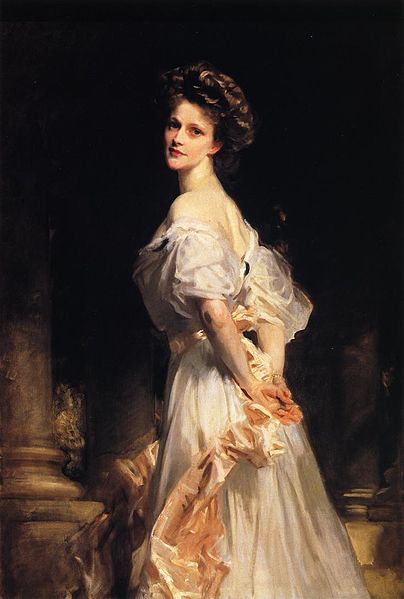
Though she married into one of the richest families in the world, she was buried with a Confederate flag...quite a lady!
I'm a Virginian. Virginians are the most conceited people on earth. There's nothing higher you can aspire to. Lady Nancy Astor
(Nancy Langhorne (Astor) came into the world on May 19, 1879 in Danville Virginia, one of 11 children )
At the age of 18, Nancy married Robert Gould Shaw, the nephew of Robert Gould Shaw who commanded the all-black 54th Massachusetts Volunteer Infantry. After divorcing the adulterous Shaw she married the son of William Waldorf Astor (cousin of Titanic victim John Jacob Astor IV)
Nancy died on May 2, 1964 just before her 85th birthday, a confederate flag was buried with her.
J.E.B Stuart was a cousin to the Langhorne family.
“Our women gave their carpets to make blankets, their dresses to be made into shirts for the soldiers, and their linen to furnish lint for their wounds, and then, clad in home-spun, they gave themselves.”
The Reverend John Levi Underwood in his book, The Women of the Confederacy, published in 1906, gives testimony to Southern womanhood. He wrote of defiance when he recited two stories:
Union General Milroy had declared Marshal Law within his theater of operations restricting all movement of civilians from their homes. A local farmer, John Allen, had a milk cow that the family depended upon. His daughter, a spry 13 years old, went to see General Milroy to gain a pass to move the cow to pasture. General Milroy tartly replied, “I can’t do anything for you rebels and I will not let you pass. The rebellion has got to be crushed.” Little Miss Allen, not to be rebuffed, retorted, “Well, if you think you can crush the rebellion by starving John Allen’s cow, just crush away.”
In another instance he cited a note written by Sherman responding as to why he was making the wives and mothers of Confederate soldiers leave occupied Savannah, “You women are the toughest set I ever knew. The men would have given up long ago but for you. I believe you would keep this war up for thirty years.”
And perhaps it was a young Southern girl much like Chloe that inspired Underwood to write, “Gentle, but brave; modest, but independent. Seeking no recognition, the true Southern woman found it already won by her worth; courting no attention, at every turn it met her, to do willing homage to her native grace and genuine womanhood.”
So I have to say, thank you Shellman, and especially Chloe, for a moment of dreamtime. A dreamtime when the men and women of a new nation stood against a giant and suffered, as one, the humiliation of defeat. Though subjugated and with the banner furled, we must never forget.
Editor’s note: Ray Davidson is a syndicated columnist. He can be reached at rayd45@aol.com.
In July, 1891, when the impressive statue of Stonewall Jackson was dedicated over his grave, 30,000 people gathered in Lexington, Virginia. On the day before the dedication, survivors of the Stonewall Brigade, dressed in faded and tattered gray uniforms, were the center of attention in the town.
That night when citizens of the town wanted to ensure the old soldiers comfortable lodging, a diligent search of homes and hotels yielded not one of the men. Near midnight the Brigade was found, huddled in blankets around Jackson's statue in the cemetery. Urged to leave the damp ground and partake of the town's hospitality, none of the men stirred. Finally one said, "Thank you sirs, but we've slept around him many a night on the battlefield, and we want to bivouac once more with Old Jack."
And they did. The next day, 21 July, was the thirtieth anniversary of the memorable battle where Thomas Jonathan Jackson became forever "Stonewall". The day began with a procession featuring a brand-new Confederate battle flag made especially for the occasion. When the graveside ceremonies ended, the Stonewall Brigade fell into ranks and marched slowly to the cemetery gate.
There one of the veterans paused and gazed around at the land he had defended with the general. When his eyes reached Jackson's grave, he removed his hat and shouted in a choking voice, "Goodbye, old man, goodbye! We've done all we can for you!"
Why don't we get this kind of turn out to honor our ancestors anymore?
Some historians are fond of saying the South is better off for having lost the war. Louisiana was the 2nd richest state in the Union before the war and became the second poorest state in the Union after the war. I don’t see the logic.
If the truth be known…
New Orleans had the largest population of free blacks in the country, often educated, middle class and property owners…
Oh and the largest slave market in the country...was in Washington DC.
The Army of Northern Virginia’s greatest victory, out numbered 2-1, came at a great price…
Lee risked dividing his forces 'retaining two divisions to focus Hooker's attention, while Stonewall Jackson marched the bulk of the Confederate army west across the front of the Federal line to a position opposite its exposed right flank. Jackson executed this daring and dangerous maneuver throughout the morning and afternoon of May 2. Striking two hours before dusk, Jackson's men routed the astonished Federals in their camps. In the gathering darkness, amid the brambles of the Wilderness, the Confederate line became confused and halted at 9 p.m. to regroup.
Riding in front of the lines to reconnoiter, Stonewall Jackson was accidentally shot and seriously wounded by his own men. Later that night, his left arm was amputated just below the shoulder.
The Confederates suffered 14,000 casualties, while inflicting 17,000. But the most damaging loss to the Confederacy was the death of Lee's "right arm," Stonewall Jackson, who died of pneumonia on May 10 while recuperating from his wounds.